
A three way valve is one of those components that looks simple from the outside but plays a surprisingly versatile role in fluid control systems. You’ll find it everywhere—from HVAC and industrial pipelines to marine cooling and fuel systems—because it can direct, mix, or divert flow with a single valve body.
What Is a Three Way Valve
A three way valve is a valve with three ports (openings) instead of the usual two. These ports allow the valve to:Combine two inlet flows into one outlet, or Split one inlet flow into two different outlet paths
Rather than simply opening or closing flow, a three way valve controls the direction and interaction of fluids inside a system.
Basic Working Principle of a Three Way Valve
At its core, a three way valve works by moving an internal closure element—such as a ball, plug, or disc—to open or block different flow paths between the three ports.
-
①One port may be fully open while another is closed
-
②Two ports may be partially or fully open at the same time
-
③Flow may be redirected smoothly without stopping the system
This flexibility is what makes three way valves ideal for applications that require flow switching, mixing, or bypassing.
The Two Main Types of Three Way Valves
1. L-Port Three Way Valve (Flow Diverting)
An L-port valve has an internal passage shaped like the letter “L.”
How it works:
-
①Connects one inlet to either of two outlets
-
②Flow can be diverted in one direction at a time
-
③The two outlet ports are never connected simultaneously
Typical uses:Flow direction change.Switching between two pipelines.Bypass lines in industrial and marine systems
2. T-Port Three Way Valve (Flow Mixing or Diverting)
A T-port valve has an internal passage shaped like a “T.”
How it works:
-
①Allows one inlet to supply two outlets at the same time
-
②Can also mix two inlets into one outlet
-
③Provides more flow combinations than an L-port valve
Typical uses:Temperature control in HVAC systems.Mixing hot and cold fluids.Marine cooling and ballast water systems
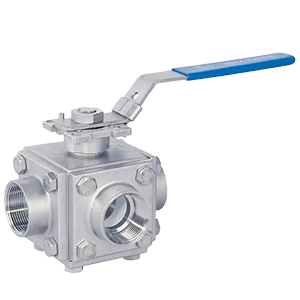
How Different Three Way Valve Designs Operate
Three way valves can use different internal mechanisms, each affecting how the valve works:
-
Ball-type three way valve: Uses a drilled ball; offers tight shut-off and quick operation
-
Plug-type three way valve: Provides precise flow control and durability in high-pressure systems
-
Globe-type three way valve: Allows throttling and accurate regulation of flow
The choice depends on whether the system prioritizes on/off control, flow regulation, or long-term reliability.
Post time: Feb-05-2026