
A 3-way valve is a versatile flow control device used to direct, mix, or divert fluid within a piping system. Unlike standard on-off valves, a 3-way valve connects three ports, allowing more flexible system design and better process control. When used correctly, it can reduce piping complexity, improve efficiency, and lower installation costs.
What Is a 3-Way Valve
A 3-way valve has three ports and one internal closure element, such as a ball, plug, or disc. By rotating or actuating the valve, flow can be redirected between ports or combined from two inlets into one outlet.
3-way valves are commonly available in:Ball valve design.Plug valve design.Globe valve design.Manual or actuated versions
They are widely used in HVAC, marine systems, water treatment, oil and gas, and industrial process control.
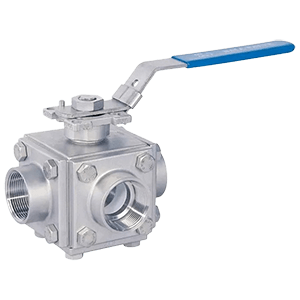
Two Main Types of 3-Way Valves
1. T-Port 3-Way Valve
A T-port valve allows flow to:Pass straight through.Be diverted to one outlet.Flow to both outlets at the same time
Best for:Flow diversion, system switching, and multi-directional distribution.
Common applications:Marine ballast systems, fuel transfer lines, chemical distribution networks.
2. L-Port 3-Way Valve
An L-port valve directs flow from one inlet to only one outlet at a time.
Best for:On-off diversion where mixing is not allowed.
Common applications:Pump isolation, tank selection, cooling water routing.
How to Use a 3-Way Valve in Different Applications
HVAC Systems
In heating and cooling systems, 3-way valves are often used for temperature control.They regulate flow between hot and cold water lines to maintain a stable supply temperature. Correct installation ensures smooth modulation and energy efficiency.
Key tip:Install the valve according to the manufacturer’s flow direction marking to avoid unstable control.
Marine and Shipbuilding Systems
On ships, 3-way valves help manage ballast water, cooling circuits, fuel oil systems, and auxiliary piping.They reduce the number of valves needed and simplify operation in confined spaces. Marine-grade materials such as bronze, stainless steel, or cast steel are commonly used to resist corrosion.
Key tip:Always verify classification society approval when using 3-way valves in critical marine systems.
Industrial Process Control
In chemical and manufacturing processes, 3-way valves control mixing, blending, or diversion of fluids.They are often paired with actuators and control systems for automated operation.
Key tip:Select the correct seat material based on temperature, pressure, and chemical compatibility.
Water Supply and Treatment Systems
3-way valves are used to switch between supply sources or redirect flow during maintenance.They support efficient system operation without shutting down the entire pipeline.
Key tip:Choose full-bore designs to minimize pressure loss in water systems.
Common Mistakes to Avoid
-
①Using a T-port valve where mixing is not allowed
-
②Ignoring flow direction markings
-
③Selecting the wrong valve material
-
④Overlooking pressure and temperature limits
-
⑤Installing without considering actuator compatibility
Avoiding these errors helps extend valve life and ensures stable system performance.
Post time: Dec-19-2025