
A storm valve is a specialized non-return valve used mainly in marine and offshore drainage systems. Its design focuses on preventing seawater backflow, even under extreme conditions such as heavy waves, storms, and sudden pressure surges.
1. One-Way Flow Protection Against Backflow
The primary feature of a storm valve is automatic backflow prevention.
-
①Allows water to discharge from the ship or structure
-
②Closes instantly when external seawater pressure rises
-
③Operates without power or manual control
When waves or high tides push water toward the outlet, the valve shuts by itself. This protects internal spaces from flooding.
2. Gravity- and Pressure-Assisted Closing Design
Storm valves rely on a combination of:Gravity and External water pressure
As soon as the discharge flow stops or reverses:The disc or flap returns to the closed position.Rising sea pressure tightens the seal
This dual-action closing method ensures fast response during storms.
3. Robust Disc and Seat Structure
Storm valves are built for harsh marine environments.
Key structural features include:Thick valve bodies.Reinforced discs or flaps.Metal-to-metal or rubber-lined sealing surfaces
This construction helps the valve resist impact from waves, debris, and pressure fluctuations.
4. Minimal Flow Resistance During Discharge
Despite strong sealing, storm valves are designed to:Open fully during normal discharge.Reduce pressure loss.Allow smooth drainage
This prevents water accumulation inside tanks, decks, or drainage systems.
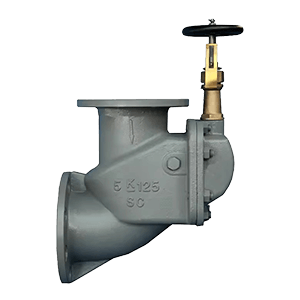
5. Corrosion-Resistant Materials
Storm valves are constantly exposed to seawater and moisture.
Common materials include:Cast iron with marine coating.Ductile iron.Bronze.Stainless steel
Protective coatings and corrosion-resistant alloys extend service life and reduce maintenance.
6. No External Power or Control Needed
Storm valves operate fully automatically.
-
No actuators
-
No electrical systems
-
No human intervention
This makes them highly reliable during power loss or emergency situations.
7. Compact and Space-Saving Installation
Most storm valves feature:Simple structures.Compact profiles.Flanged or welded connections
They are easy to install at ship sides, deck drains, and overboard discharge points.
8. Suitable for Multiple Drainage Media
Storm valves handle:Seawater.Rainwater.Grey water.Deck drainage
Their versatility allows use in many marine drainage applications.
9. High Reliability in Extreme Weather Conditions
Unlike standard check valves, storm valves are designed for:Strong wave impact.Sudden pressure changes.Continuous exposure to the marine environment
This reliability is why they are widely used on ships, offshore platforms, and coastal structures.
Post time: Jan-14-2026