
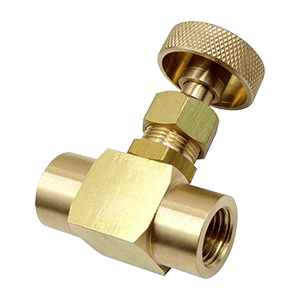
A needle valve is a precision flow-control valve designed to regulate very small flow rates with high accuracy. It is widely used in systems where fine adjustment matters more than fast opening or closing.
What Is a Needle Valve
A needle valve is a type of valve used to control flow gradually and precisely.It gets its name from the long, slender, needle-shaped stem inside the valve body.This sharp, tapered stem moves in and out of a small orifice. As it moves, it changes the size of the opening. This allows very accurate control of fluids or gases.
Needle valves are commonly found in:Instrumentation systems,Pressure gauges,Hydraulic lines,Fuel and gas systems,Marine and industrial control circuits
They are not designed for on-off service. They are built for fine tuning.
Main Components of a Needle Valve
-
①Valve body:Houses internal flow passage
-
②Needle (stem):Long and tapered for precise control
-
③Seat:Matches the needle shape to create tight sealing
-
④Handwheel or actuator:Used to turn the stem
-
⑤Bonnet and packing:Prevents leakage around the stem
Each part plays a role in achieving smooth and stable flow adjustment.
How Does a Needle Valve Function
When the handwheel turns:
-
①The stem moves downward to reduce flow
-
②The stem moves upward to increase flow
As the tapered needle approaches the seat, the flow passage becomes smaller.As it retracts, the opening grows gradually.
This design allows:Very slow flow changes.Accurate pressure control.Stable output without sudden surges
Because movement is linear and controlled, operators can make small adjustments with confidence.
Why Needle Valves Offer Precise Control
-
①Tapered stem geometry:Enables fine flow modulation
-
②Small orifice size:Reduces turbulence
-
③Slow stem movement:Prevents sudden pressure changes
This makes them suitable for low-flow systems where stability matters more than speed.
Common Applications of Needle Valves
Instrumentation and Measurement:They control flow to pressure gauges and sensors.This protects sensitive instruments from damage.
Hydraulic and Pneumatic Systems:They regulate fluid or air flow in control lines.
Marine Systems:They are used in fuel lines, lubrication systems, and sampling points where precision is critical.
Chemical and Process Industries:They handle dosing and metering applications.
Needle Valve vs Other Valve Types
Compared to ball or gate valves:
-
①Needle valves are slower to operate
-
②They are not suited for large flow rates
-
③They provide much higher control accuracy
Materials Used in Needle Valves
Common materials include:Brass.Stainless steel.Carbon steel.Monel or alloy steel for corrosive media
Material selection depends on pressure, temperature, and fluid type.
Key Advantages of Needle Valves
-
①Precise flow regulation
-
②Excellent control at low flow rates
-
③Good sealing performance
-
④Stable pressure adjustment
Limitations to Consider
-
①Not suitable for quick shut-off
-
②Not ideal for dirty or particle-laden fluids
-
③Limited flow capacity
Post time: Jan-14-2026