
In modern industrial systems, reliable flow control is not optional. It is a basic requirement for safety, efficiency, and stable operation. Among all valve types used today, ball valves have become one of the most essential components in industrial flow control systems. Their simple design, fast operation, and strong sealing performance make them a preferred choice across many industries.
Fast and Reliable On–Off Control
One of the main reasons ball valves are widely used in industrial flow control is their quick operation.
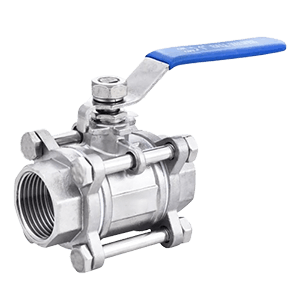
A ball valve uses a rotating ball with a drilled bore. When the bore aligns with the pipeline, flow passes freely. When rotated 90 degrees, the flow stops completely. This quarter-turn operation allows operators to open or close the valve quickly, even in emergency situations.In industries where rapid shutdown is critical—such as oil and gas, chemical processing, and marine systems—this fast response significantly improves safety.
Excellent Sealing Performance
Ball valves are known for their tight shut-off capability.The ball seals directly against soft or metal seats, creating a reliable seal even under high pressure. This minimizes leakage and reduces the risk of product loss, environmental contamination, or system failure.
For applications involving gas, fuel, steam, or hazardous fluids, leak prevention is a major concern. This is why ball valves are often chosen over gate or globe valves when zero leakage is required.
Low Pressure Drop and High Flow Capacity
Another key advantage of ball valves in industrial flow control is their low flow resistance.
When fully open, the internal bore of the ball valve provides a straight-through flow path. This reduces pressure loss and allows higher flow rates compared to many other valve types.In large piping systems, reduced pressure drop means lower energy consumption, improved efficiency, and less stress on pumps and compressors.
Durability in Harsh Industrial Conditions
Industrial environments can be demanding. High pressure, extreme temperatures, corrosive media, and frequent operation all put stress on valve components.
Ball valves are designed to handle these conditions. They are available in materials such as carbon steel, stainless steel, brass, bronze, and alloy steel, making them suitable for a wide range of industrial fluids.In marine and offshore industries, ball valves with corrosion-resistant materials and coatings perform reliably even in seawater environments.
Minimal Maintenance Requirements
Compared to other valve types, ball valves require less maintenance.Their simple internal structure reduces wear points. The quarter-turn operation minimizes friction between components. Many industrial ball valves can operate for long periods without adjustment or repair.
This reliability helps reduce downtime, maintenance costs, and labor requirements, which is especially important in continuous-process industries.
Versatility Across Industrial Applications
Ball valves are used in nearly every industrial sector, including:
-
①Oil and gas processing
-
②Chemical and petrochemical plants
-
③Power generation systems
-
④Water treatment facilities
-
⑤Marine and shipbuilding industries
They can be configured as floating ball valves, trunnion-mounted ball valves, V-port ball valves, or fire-safe ball valves, allowing precise selection based on system needs.
Post time: Jan-21-2026